I believe my first website was created in 1994 or 1995. This blog has now been running for 23 years as of 1 January 2024. One the years it’s changed providers, content has been lost, etc. (to be honest I don’t mind my juvenilia falling through the cracks of the Internet). But I’m still going! Happy New Years!
Blog
Sahlins biography update: September to November
The past few months have been very busy ones, but I wanted to write a quick update on my progress just to keep myself honest and provide a public accounting of my work so far.
I spent most of September not working on the biography, except to slowly start processing the material I had discovered in August. In late September I began a research trip which took up most of October: I flew to the University of Michigan, where I did work at the Bentley library. It was a wonderful experience. The Bentley staff were very helpful and working in the Wolf and White collections was literally a dream come true. However, I must say the best thing about the Bentley was its reading room: One wall is a giant glass window with a view of a courtyard outside. It is amazing how much this improved my experience of archival work. Library research can be tedious, ritualistic, isolating, and can lead to a lot of sensory deprivation. So having a view of something green and alive was really wonderful.
Ann Arbor was also wonderful to visit. Going to Michigan and meeting with people who were influenced by Sahlins was like meeting my matrikin: People I had heard about but never met, who were uncannily similar to me, but also so different. I received a warm welcome from the people I talked to (who didn’t ask to be named in this blog post) and learned a lot about Michigan and Sahlins.
I took a bus from Ann Arbor to Chicago — that was a real American experience — and then spent a week working at the archives in the Reg(enstein) at the University of Chicago. It was like Ann Arbor except the reading room was five degrees colder and there was no window. Do you know why? Because real intellectuals don’t need a window. #UofC. At any rate, the staff was helpful and I had a great visit back at my old stomping grounds. The highlight of the trip were the David Schneider papers, which were scandalously vivid and inappropriate.
I was back home only briefly before I headed to the last and final trip for my research. I flew to Melbourne and did work in Greg Denning’s papers, which were spread out at two collections: The University of Melbourne and the State Library of Victoria. Both institutions were very helpful, however I must say that the SLV completely earns its reputation as a great cultural institution. Now only were the hours fabulous and the facilities beautiful as usual, but the building is always so alive with people that just walking in is always a pleasure.
From there I traveled to Warrnambool for the Pacific History Association meetings. The meetings were great in terms of scholarly content and had an above-average number of people from PNG there, which I really appreciated. That’s not always true of the PHA conferences held in the American Pacific. However, it was extremely cold. I had a good time, but next time I visit Warrnambool I will buy one of those merino sweaters they sell in duty free.
After Warrnambool I traveled to Fiji to retrace Sahlins’s steps there. It was the least-planned part of the trip and I wasn’t sure what to expect. However I, like many others, was bowled over by Fijian hospitality. Government officials helped plan my trip to Moala and hosted me on the island. Of course, part of being an honored guest involves being steered in certain directions and not others, which I was aware of. Still, even the arrival of tropical cyclone Mal couldn’t make a dent in the great experience I had. Colleagues in Suva — a great little town — were also very welcoming. After years of dealing with Port Moresby it was a great change of pace.
My sabbatical will end in January, when I begin teaching again. At that point I plan to start processing all the material I have collected. I will also begin interviewing people over Zoom then. While this is going on I will start pounding out a rough draft. I might make a few brief detours to collections which are relevant, but I think the main body of research is done now.
Thanks to the hard work of librarians and archivists, there is always more past than there is present. That’s especially true of the recent past. Sahlins’s papers are not even fully catalogued yet, and much of the late 20th century is still in oral memory, not deposited somewhere. So I could do research for this book forever. But I think I have more than enough to put together a fairly strong biography of Sahlins with what I have, and I feel confident that this admittedly arbitrary stopping point is a good one. Now… on to the writing!
Sahlins biography update: Work in August 2023
August of 2023 was a milestone for my biographical research. I spent two weeks in New York conducting archival research. First, I spend a week and a half at the Rare Book and Manuscript Library at Columbia, on the top floor of the Butler. Second, I was able to spend two days at the Rockefeller Archives in the woods above Sleepy Hollow in Westchester country. These visits were very fruitful and I learned a tremendous amount.
I enjoyed my time on the upper west side tremendously. The staff at Columbia were very helpful and I learned a huge amount, despite some setbacks. Most of the Morton Fried papers were not available because the building they were in was being renovated. The archive also kept most of its material off-site, which made getting the resources I needed tricky, since once I was done with a box it was sent off-island and I wouldn’t have access to it again. Finally, Sahlins was at Columbia for a very short time, from 1952 to 1957, and I was not optimistic that there would be strong traces of him in the archives. Despite these facts, however, I had a fruitful trip.
I used materials at Columbia to create a roster of the anthropology department faculty from 1945 to 1957, tracked changes in degree requirements over time, and collated a list of courses and who taught what. This helped me understand not only Sahlins’s time in the program, but the careers of his friends and mentors, most of whom were students at Columbia just before he arrived. I also did some work into the 1960s, tracing the transformation of the department as Fried, Murphy, Harris, and others became central faculty members. The department files on the 1940s and 1950s are pretty light. I understand that the Boasian period is well documented (I didn’t look at it), and the 1960s is well documented. There are huge files on 1968 which someone should turn into a few articles or a book. The MUS crowd had incredible stories and were very lively, and they merit a lot more attention than they have gotten.
Another part of my research at Columbia was Karl Polanyi’s time there and his various projects. Sahlins was involved somehow in these projects — but how? Some of Polanyi’s personal papers are at Columbia as well, and I fell into that rabbit hole as well. I also did a bit of research on the 1920s, when Leslie White was at Columbia. The commencement records are rich and present a vivid picture of graduation ceremonies, and often feature charming small bits of ephemera, such as tickets and ribbons.
There were several highlights to my Columbia trip. In the commencement records, I found a xeroxed copy of a newspaper article which documented (with pictures) the fact that a klan meeting was staged at the graduation ceremonies Leslie White would have attended (I don’t know if he actually attended them)! It was a sobering reminder of what Boas was fighting against, as well as the power of the archives — if someone hadn’t snuck that article in there, the fact would probably have been lost to history. The other major highlight was finding a copy of a report Sahlins prepared for Polanyi’s seminar, probably the only copy in existence. It featured handwritten noted by Polanyi, a man whose handwriting I can now identify but still largely can’t read. That was very exciting and valuable. I also found a list of students in the immediate post-war period, which helps flesh out how big the GI Bill boom was at Columbia — participants remember between 100 and 200 graduate students in one year. Both those numbers seem impossible, but it is appears at its peak it was about 120.
I spent far less time at the Rockefeller Archives, but I could have spent more — they are an incredible resource and contain the papers of all the groups and projects the Rockefeller and Ford Foundations funded. These archives too had their challenges: They have a unique catalog which is unusual and takes some time to learn to use. However, the staff were very helpful and, as you might expect, the reading rooms were very well appointed. I will probably not use a microfilm reader that fine again in my lifetime. The archive is in an enormous mansion full of period furniture and art, so after using the storage lockers, kitchen, and bathrooms in that building I can see why they call it the ‘gilded age’.
The very first file I opened at Rockefeller was Sahlins’s — the finding aid listed ‘miscellaneous awards SAHL-SAR’ and I thought: Who else could be at the beginning of that file but Sahlins? It was a treasure trove of information, and I was able to find the files of several other people in Sahlins’s life, such as Service and Fried. After that it was all gravy. Most of my time was spent on contextual information, as well as some hit-or-miss requests just to see what would come out of obscurely labeled boxes. I found on microfilm Malinowski’s original 1926 talk at the first Hannover conference, complete with a record of the discussion afterwards. This was Malinowski’s debut in the United Sates. It was important for this project as Sahlins was raised in a social anthropological tradition whose genealogy doesn’t conform to the usual dichotomy that exists in disciplinary history between ‘American cultural’ and ‘British social’ anthropology. I worked through the files on the 1962 (iirc) ‘History of Anthropology’ conference, which are very detailed. I want to write an article on “the history of ‘the history of anthropology'”. I also came across long correspondence regarding Rockefeller’s funding of projects of ‘race hybridity’ in Honolulu, as well as their funding of the Bishop museum. This was the topic of a recent exhibit at the Bishop museum as well as the ground for my own history as a settler in Hawai‘i, as well as Sahlins’s own research. Very interesting to read. I went through the records of David Schneider’s Matrilineal Kinship grant as well as the conferences where Sahlins served as secretary and his wife Barbara typed up the (700+ page) manuscript. The first and last time she did something like that, I believe — a decision I respect! Perhaps the greatest challenge of this research was driving on the 287. Not a lot of aloha on that expressway. Also, driving conditions are darker and rainier than I’m used to in Honolulu.
Of course, no research project is ever truly complete. There are still many sources in New York I would like to consult. There is still a tremendous amount of work to be done at the Rockefeller Archives. I am also trying to get access to Guggenheim records regarding Sahlins’s fellowship, as well as the fellowships of several of his colleagues. I would like to return to Columbia and do work in the anthropology department’s own archives, which I hope will have syllabi and other more intellectual-historical records of Columbia in the 1950s. There is a lot to do and I look forward to a return trip some day.
Finally I want to say thank you to my research hosts, who haven’t asked to be identified on the Internet. Thanks also to the Wenner-Gren foundation and everyone there. I had a chance to visit that Storied Institution in Manhattan and soak up the monumental portraits of Wenner-Gren and his associates, as well as story with people there. It was much appreciated, as was the grant which funded this research. I hope I produce something you like.
I will be in Hawai‘i in September, then in early October I will do research in Michigan and Chicago. I will spend most of November in Australia and Fiji. That is the plan, anyway. We’ll see what happens!
Sahlins biography update: Work in July 2023
I’m renaming these posts so that they are less confusing. This update was written in August, published in September, but is about work I did in July, so I am just calling it “work in July 2023” to be less confusing.
July was a good month for my Sahlins research. The biggest news that I spent a few days pounding out copy, and the manuscript is now over 10,000 words. Some of this was from Sahlins’s early life, but a lot of it was just drafting introductory sections like ‘What Hawai‘I was like in the 1980s’ or ‘who Karl Polanyi was’.
I also did some background reading. I decided to take the high road when it came to researching the Vietnam war era of Sahlins’s life, and began reading Karnow’s book “Vietnam”, which many consider to be the best one volume history of the war. It is well-written, based on years of journalistic work in the field, and very impressive. I am over 100 pages in and the Vietnamese have just repulsed the Tang empire, so I will certainly come to the study of the war briefed on the longue durée.
I then transitioned to reading to prepare for my trip to New York, which will occur next week, with a focus on the Steward grad students who influences Sahlins. I’ve long been interested in Fried, and am now more interested. Kirchhoff is especially interesting and there is now work done on him — he corresponded with Trotsky! Service, who I long knew as a ridiculously hard-core person, has been revealed to me as even more hard-core. Julie Lewis’s dissertation is good and is a valuable source, as she interviewed many of them.
I also worked through Sahlins’s dissertation, Social Stratification in Polynesia, and the scholarly response to it. Experts on the Pacific — Firth, Hogbin, (Felix) Keesing, and Guiart — thought Sahlins was totally wrong but impressed by the ambition of the effort and the ethnographic synthesis. Kaberry and (Cora) Du Boi wrote penetrating, insightful, and skeptical reviews. You could hear the eyebrows raising archly. Guiart’s review is absolutely amazing for its passion, verve, unfairness, and insight. Sahlins’s task is impossible. Or it is impossible, but the work of a lifetime. The sources are inadequate for the task. Or they are adequate, but Sahlins did not consult the right ones. That sort of thing.
I’m really looking forward to working in New York. I’m sure I’ll have more to say in September.
Sahlins biography July 2023 update
After third months of research for my biography of Marshall Sahlins, I have finally arrived at an important milestone: Sahlins’s birth! I’ve done a lot of work on his family, especially his father, as well as the broader history of the west side of Chicago. I’ve now begun writing about his life from birth to his matriculation at the University of Michigan. I’ll be doing archival work at Columbia, where he earned his Ph.D., in August and then I’ll be at Michigan in September (iirc) so those are the next big chunks of career to consider.
I’ve spent a lot of time on Sahlins’s father, who left a paper trace because of his career as a doctor. He also has a great story, preserved in family lore, about his escape from Russia during WWI — a story which appear to be largely true! I regret that I haven’t focused so much on his mother. I can’t tell whether this is some sort of unconscious sexism on my part, or the fact that the records of the time privilege male experiences, or that she had a relatively uneventful life after coming to the US. She as Latvian, and there is less in English (afaik) about Latvia than there is about Russia. But I will keep looking, even if my main focus shifts elsewhere.
One potential area of research is to begin boning up now on what might be called ‘contextual biographies’ from the period, such as Hortense Powdermaker’s Stranger and Friend. I’d also like to read some of the background literature on Robert Redfield — he was so central to American Anthropology but seems to me more like an eminence grise whose impact is under appreciated. Another area of weakness for me right now is the rise of the New Left and the anti-Vietnam side of Sahlins’s years at Michigan. More background reading will prepare me for forthcoming research in this regard.
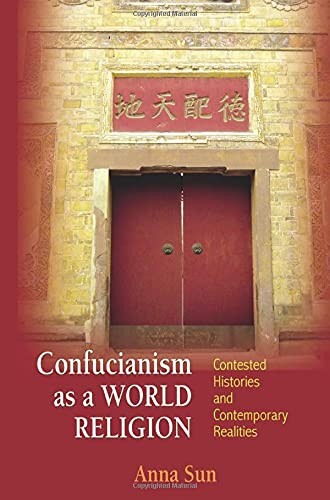
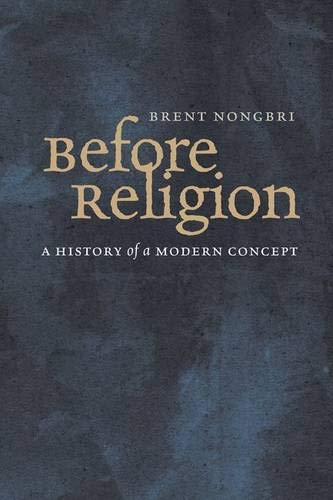
How X Became a Religion
Many people don’t believe me when I tell them ‘religion’ is not a cross-cultural phenomenon and that it was mostly in the 19th century when white people (i.e. protestants) began classifying things in other people’s cultures in religion. So I’ve decided to keep track of some books on this topic here.
Sahlins biography June 2023 update
Here’s a quick update regarding my work on the Marshall Sahlins biography up to 1 June 2023.
I spent most of May not actually writing the biography, but preparing to write it. As I may have mentioned earlier, I spent the spring semester writing grants to conduct research on the biography and received two. The first is a small travel grant from the University of Michigan that will pay for me to consult the libraries there. The second and much larger grant from Wenner-Gren foundation will allow me to do library research at the University of Chicago and Columbia, and also to visit Moala. I’m excited to receive this funding as it will really make the research for the book possible.
In the meantime I have spent some time reading up on background history, including the history of Russia and Ukraine, as well as some background reading on the leftist traditions that Sahlins would have encountered (see, inter alia, the Russian Revolution). I’ve also done some research on the history of the west side of Chicago, where Sahlins grew up. It’s amazing how much information is on the Internet when you know where to look. There are even yearbooks of the Lewis Institute, where his father studied to get American education credentials. The have lovely art nouveau illustrations from (I imagine) the students.
Now that it is June and the summer is officially under way for me, I will begin doing interviews with people who knew Sahlins. I’m planning to start with some of his older students who will expertise that I hope will guide me. I will spend about half go July in Papua New Guinea, looking for new research projects there for after the book is finished. Then in August I’ll begin interviewing in earnest.
Sapir and Goldenweiser, White and Redfield

Investigating the biographies of Leslie White, Robert Redfield, Edward Sapir, and Alexander Goldenweiser. White studied with Goldenweiser in New York. Goldenweiser and Sapir were exact contemporaries in New York. White, Redfield, and Sapir were all at Chicago.
Also attaching image of the overlapping lives of Sapir and Goldenweiser. Born 4 years apart, they got their Ph.D.s within a year of each other, and died within a year of each other as well. Boas hoped they would both faculty at Columbia when he retired.

in 1925 Goldenweiser was teaching a course at the New School on ‘new evolutionism’. When you move past pat stereotypes of ‘particularist Boasian’ anthropology in the 1920s looks a lot different!
Copious Free Time: Evans-Pritchard Edition
Here are some pieces that I want to read but almost definitely will not get around to. Perhaps you will have better luck?
Sean Kingston has an amazing book on Evans-Pritchard entitled A Touch of Genius: The Life, Work, and Influence of Sir Edward Evans-Pritchard. It is just part of SK’s new open access initiative so you will not have to pay the usual US$15,000 that the average SK hardback costs. I’ve skimmed through it. The book is an edited volume, but not an average dull one. It is a sort of group biography of Evans-Pritchard which featured numerous, short, incredibly detailed articles. Many of them are just collections of long quotes from E-P’s associates and friends remembering him. It also includes a high amount of new E-P images, including not just photos from his youth, but of his groceries. It really looks like an amazing postmodern collaborative biography. Highly recommended.
The 1970 volume Afro-American Anthropology: Contemporary Perspectives has reflexive piece by Charles and Betty Lou Valentine on fieldwork called “making the scene, digging the action, and telling it like it is: anthropologists at work in a dark ghetto”. Charles was a white reformed Melanesianist, Betty Lou a Black American, and the article recounts raising their young child during fieldwork. This couple deserves more attention in the history of anthropology.
Bashkow and Shaffner’s obituary of Roy “Coyote Anthropology” Wagner in American Anthropologist is excellent and on an important figure (ok I read this one).
Mediastudies Press have an open access reprint of Irving Goffman’s dissertation, Communication and Conduct in an Island Community.
Of Course Wikipedia has a list of foods named after people
Saleem Ali has a new book on aluminium: From Soil to Foil: Aluminium and the Quest for Industrial Sustainability. He’s an impressive guy, full of energy.
Internet history books often don’t age well, but I think Ben Smith’s Traffic will be an exception. His ability to flood my socials is unprecedented. Also, he discusses what I think of as the ‘Savage Minds’ period in Internet History, so it is especially relevant to me.
That’s it for now! Take care.
Sahlin Biography May 2023 Update
As most of my friends and colleagues already know, the project I will take during my sabbatical in the (boreal) fall of 2023 is a biography of Marshall Sahlins. I’ll begin in the summer and since that time is almost upon my, I wanted to write the first of what I hope will be several updates about the project.
I’m excited to be working on a project of this importance and size — whether you liked Sahlins or not, he was a major force in anthropology for a long time and his story is a lens to tell the story of anthropology after World War II more generally.
I’m also horned to have the support of many people and institutions. I undertook this research after Marshall’s son Peter approached me about it at the memorial conference in Sahlins’s honor on 4 April 2022. It’s an honor and also quite intimidating as Peter is himself a very distinguished historian who knows more about Marshall’s life than I do! I am also very lucky to be conducting this research with the support of the Wenner-Gren Foundation as well as a Bordin/Gillette Fellowship from the University of Michigan.
The research for the book will be mostly library based, and I plan on doing work in the libraries and archives of the universities Sahlins was associated with: Michigan, Chicago, and Columbia. In addition to working in Hawai‘i through most of the 1970s, Sahlins was also a visiting professor at Mānoa in the 1980-1981 school year, and I’ve done a bit of work on his time here. Our department secretary still has his syllabi on hand!
I also plan to interview people who knew Sahlins, so if I reach out to you soon, don’t be surprised!
Finally, this research will take me to Fiji, where I hope to do some research in the library and archives to improve my extremely basic understanding of that country. Then I’d like to go to Moala, Sahlins’s fieldwork site, to see what sort of relationship people there have with him, his memory and influence, and his book Moala.
The one place I cannot get to at the moment is Paris. Sahlins’s two years in France were central to his intellectual development, but at the moment I don’t have the funds to visit the city and do the sort of in-situ interviewing and library research work I’d like to do. Perhaps I’ll apply for some funding later. Or… if anyone wants to fly me out for a talk… let me know!
Finally, I want to be clear from the beginning that I do not intend this book to be a hagiography. Sahlins loved competition and found it boring to be worshipped. Also, I live in Hawai‘i, where I’ve listened to a lot of voices that are critical of his work. My goal in writing this book is to reveal the complexity of his life and to see it from a variety of angles. If I present him as only a great sage or only a grumpy, obsolete dinosaur, then I will have failed. How well I succeed in this task is something that will only become clear as I move forward with this project. More soon.


You must be logged in to post a comment.